
We were separated into groups of 2-4 each with a box filled with some artefacts and collections from the archive within London College of Communication. On the table, there was a box filled with a collection of old leaflets, booklets, pamphlets and flyers advertising a range of services, exhibitions and other informative pieces for students within, what is now, UAL. These pamphlets weren’t just from LCC but all the other UAL campuses. We were tasked to curate an exhibition using 5 pieces of artworks however there were no pieces of typical artworks within our boxes that at first made it confusing as it would have been boring and pointless to put five small leaflets, which were originally intended for students, into an art exhibition.
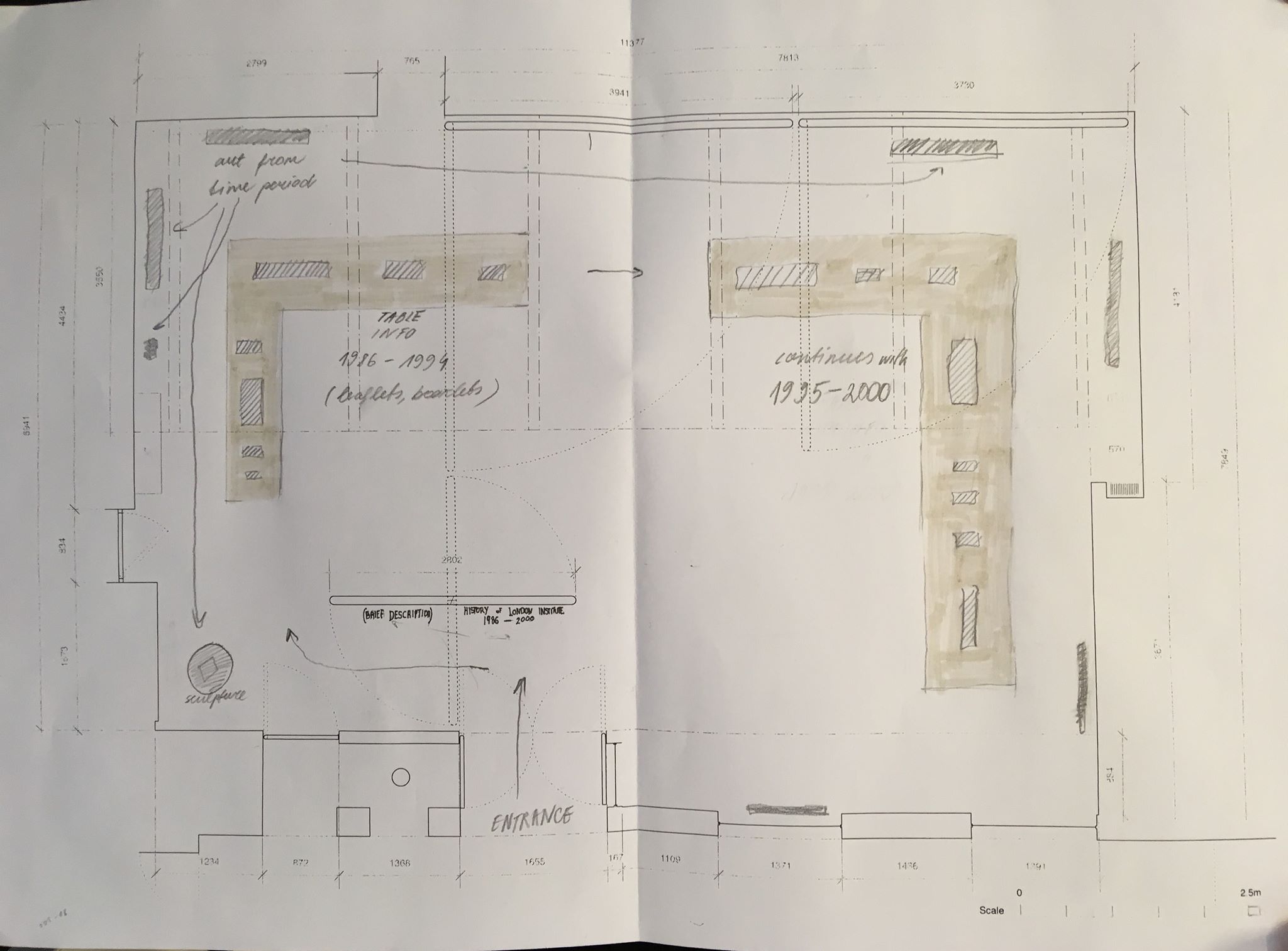
We decided to approach our task in a different manner and decided that in our imagined exhibition we would lay out the pamphlets onto tables with a protective glass case to cover the items. As seen in many historical exhibitions before such as The Horniman Museum (Forest Hill) and the Welcome Collection with the exhibition of “Can Graphic Design Save your Life?” you are often faced with items and information pieces laid out in the same format. This gives the reader a more natural way of overviewing the elements in the right order which in our cases ordered from 1986 – 2000. We separated the two tables, on the plan sheet, going from; first: 1986 – 1994, second: 1995 – 2000. To attract the wider audience and make it more relevant not just for current students and alumni, we further decided to include (even though they weren’t in the box) some of the previous art students’ art pieces who studied at UAL in the related period.
 KЯrt
KЯrt 